pH tells us how acidic or alkaline the water is. Different shrimp need different conditions.
0Acidic7Neutral14Alkaline
An illustrated scale, not a safe-range chart. pH alone cannot establish water safety.
WATER, MADE SIMPLE
Different shrimp. Different starting points.
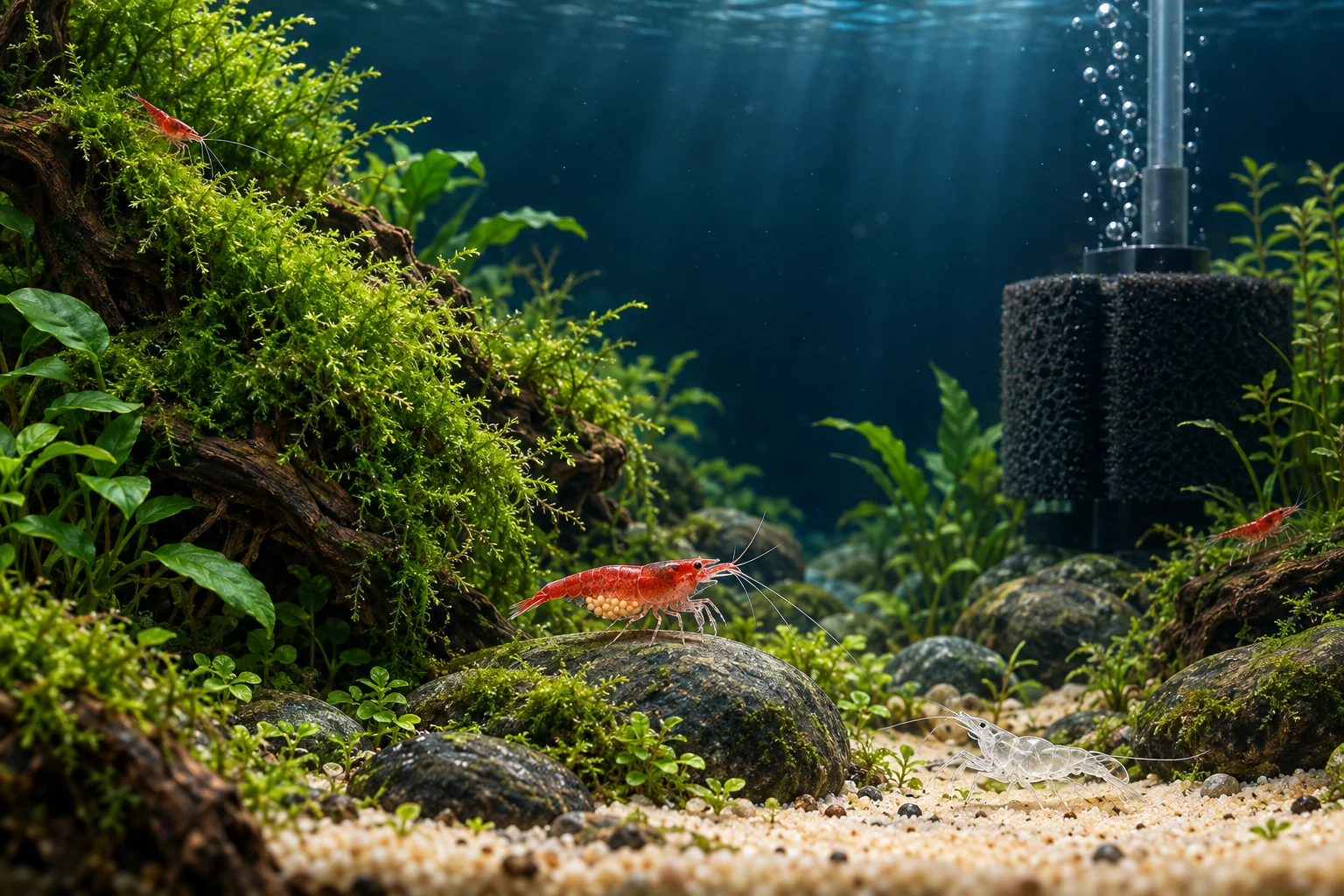
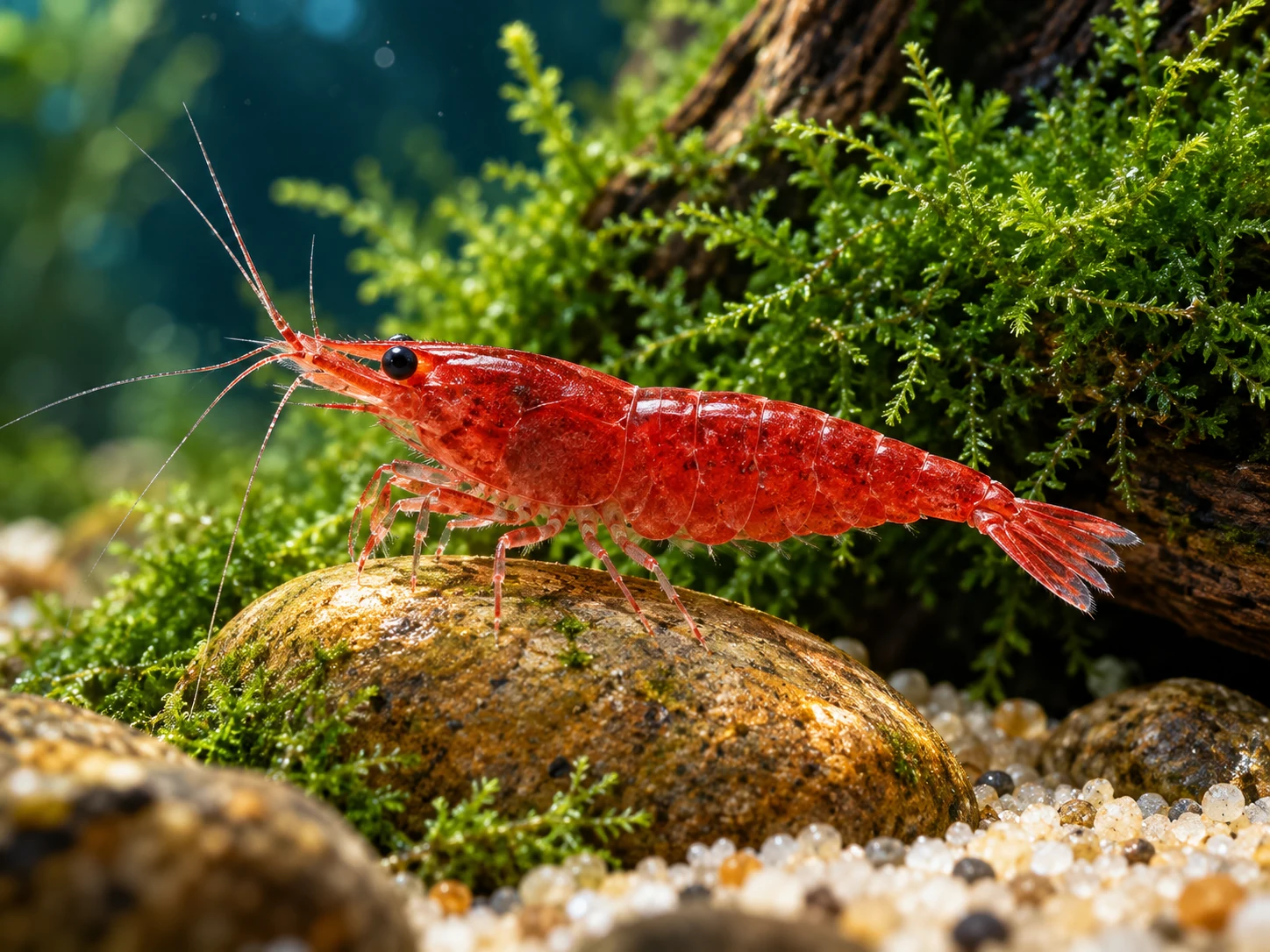
NEOCARIDINACherry shrimpA familiar splash of redAI illustration · appearance varies by stock
PUBLISHED CARE EXAMPLE
Cherry shrimp
Temperature
22–24°C
pH
6.5–8.5
GH · minerals
At least 6°
KH · buffering
At least 2°
Aquarium Co-Op’s cherry shrimp guidance. These values are a reference, not universal limits. Match your stock’s established conditions; avoid sudden changes.
Trade labels describe what is sold. They do not reveal every inherited trait. Mixing colour lines can reduce colour consistency, and blue varieties may have different breeding histories.
Preserve founder lines and record all assessable offspring. Treat a published cross as a hypothesis for your own stock.
GH, KH, temperature, ammonia and nitrite tell different parts of the story. TDS alone cannot establish water safety or hardness.
A controlled temperature study found egg loss at 32°C. Do not heat a tank simply to rush breeding. Hatch dates should be observation windows, not promises.
Red and black Galaxy selections are included in Explore Shrimp. These trade names describe colour and pattern; they do not establish a genotype or guarantee patterned offspring.
Keep supplier ancestry and water conditions with your tank record. Preserve founder lines, photograph offspring at comparable ages, and track colour, spotting and fishbone expression separately.
Visible developing eggs in the ovaries; not the same as carrying fertilised eggs.
F1
The first offspring generation of a defined parental cross.
F2
Usually the offspring of an F1 × F1 mating.
Backcross
An offspring crossed to a parent or a parental line; record which one.
Selection
Choosing the next breeders. Healthy off-type animals can be rehomed.
Research foundation: 2 October 2026. This first catalogue distinguishes practical reports from controlled research. No guaranteed genetic ratios or medical treatment advice.